This article walks you step by step through using sui-move-analyzer and aptos-move-analyzer in the Cursor editor, covering installation, initial configuration, common troubleshooting, and workflow best practices.
BitsLab has developed a cutting-edge AI auditing agent, the BitsLabAI Scanner, designed specifically to analyze and protect Web3 applications. We recently tested this technology in the SuiDex public audit competition, and the results were outstanding. Powered by its AI-driven scanning capabilities, BitsLabAI Scanner outperformed most audit participants, helping our team secure second place.
The MoveBit team, a sub-brand of BitsLab, has simultaneously released aptos-move-analyzer v1.1.4 and sui-move-analyzer v1.3.1, delivering a more stable and efficient local development environment for Move language developers building on the Aptos and Sui blockchains.
Upgrading a Sui Move Package does not automatically disable its previous versions. Each upgrade publishes a new Package ID, while earlier versions remain on-chain. If other modules, routers, or clients continue to call a legacy Package, and multiple versions can modify the same Shared Object, conflicting assumptions about shared state can introduce cross-version vulnerabilities.
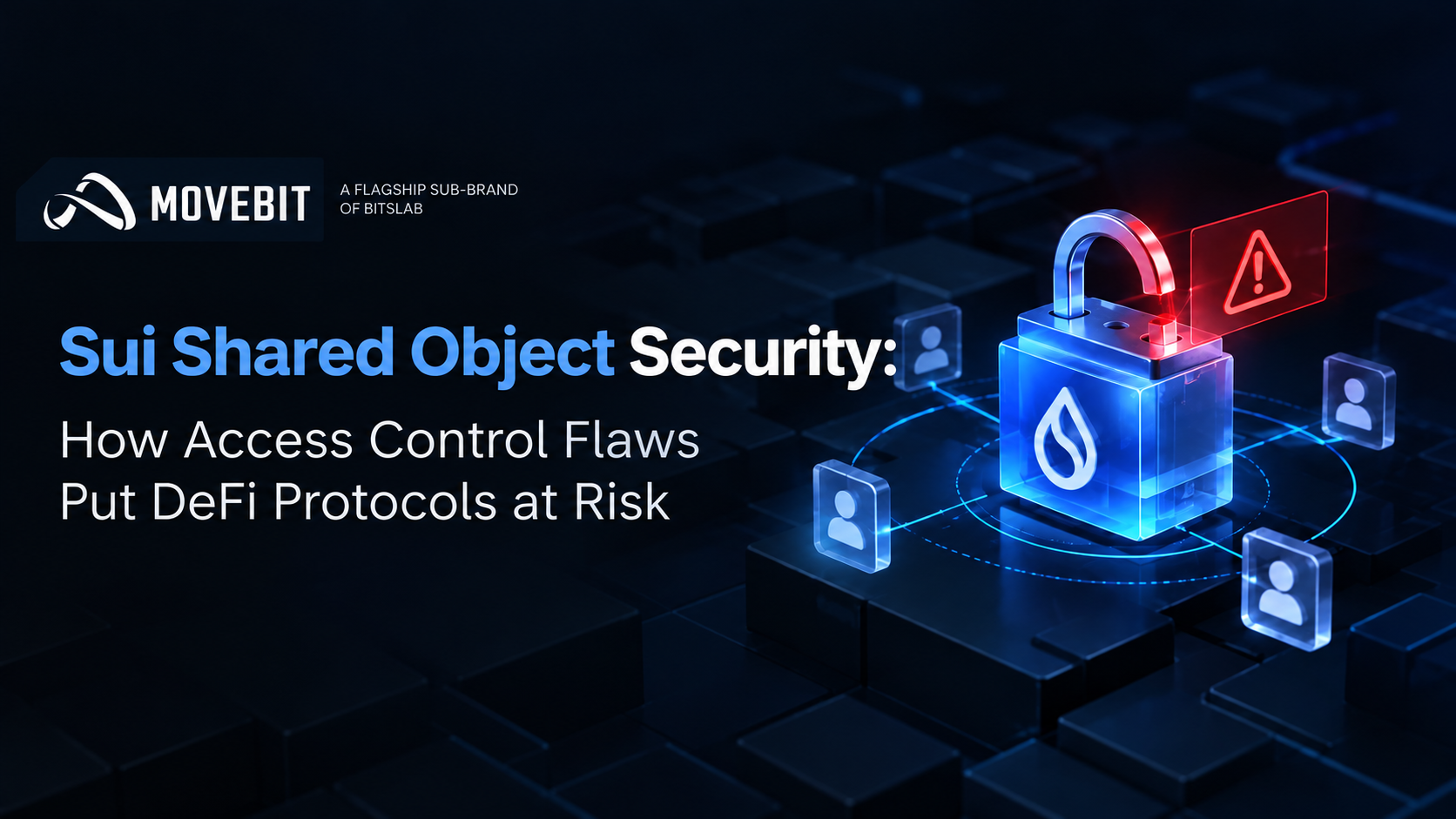
As an increasing number of DeFi protocols deploy on Sui, Shared Objects have become essential components of liquidity pools, lending markets, and other on-chain financial applications. However, a seemingly simple permission issue can expose an entire protocol's risk parameters to unauthorized calls.
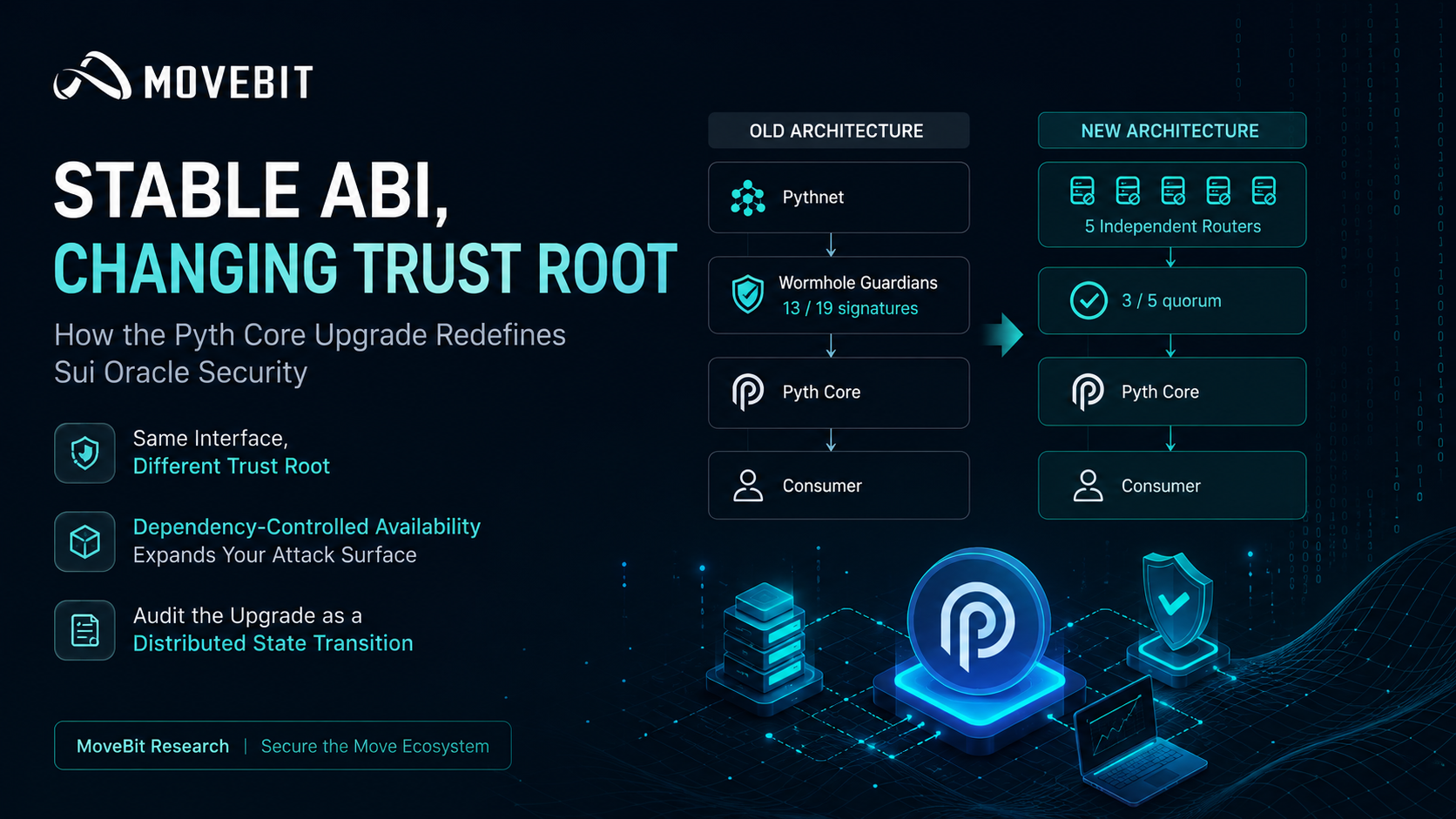
On August 26, Pyth Core introduced a major infrastructure upgrade. The new architecture preserves compatibility at the Hermes API and on-chain ABI layers, but the underlying verification model changes significantly: the previous path relied on Pythnet and a 13-of-19 Wormhole Guardian signature threshold, while the new design uses five independent routers with a 3-of-5 quorum.